





 Send Inquiry
Inline Fan
Price 20000 INR/ Unit
Inline Fan Specification
- Voltage
- 230/380/415/440 Volt (v)
- Revolution
- NA
- Noise Level
- 65 db
- Speed
- 960/1440/2880 RPM
- Power
- Customer to specify Horsepower (HP)
- Power Consumption
- Customer to specify Kilowatt (kW)
- Air Volume
- Customer to specify ft3/min (CFM)
- Pressure
- Customer to specify Pa
- Usage
- Industrial Ventilation & Exhaust Systems
- Type of Fan
- Inline Ducted
- Size
- Customer to specify
- Power Mode
- Electric
- Installation Type
- Duct
- Height
- As per standards Millimeter (mm)
- Blade Material
- Aluminum Alloy
- Product Type
- Inline Duct Fan
- Weight
- As per design Kilograms (kg)
- Color
- Siemens Grey
- Length
- As per standards Millimeter (mm)
- Width
- As per standards Millimeter (mm)
- Shape
- Round
- Warranty
- 1 year
Inline Fan Trade Information
- Minimum Order Quantity
- 1 Set
- FOB Port
- Nhava Sheva Mumbai
- Supply Ability
- 10 Sets Per Week
- Delivery Time
- 10 Days
- Packaging Details
- Seaworthy Packing
- Main Domestic Market
- Telangana, Rajasthan, Chhattisgarh, Maharashtra, Karnataka, Madhya Pradesh, Gujarat, Andhra Pradesh, Kerala
- Certifications
- ISO 9001:2015
Inline Fan About
Aninline exhaust fanis best defined as a fan that is mounted inline (inside or connected to ducting) that is used for extraction purposes. An inline fan does not sit directly on the plasterboard or ceiling, instead it is typically located inside the attic or roof space a little bit further away from the room.
Benefits of using an inline fan
- Reduced NoiseAs the fan is located further away in the roof space and not directly above you the noise levels within the room you are extracting from will be less.
- High PowerInline fans are available in large sizes with very high power motors. Quite often this type of power is simply not available from a standard ceiling mounted or wall mounted extraction fan.
- Length of duct runInline fans are engineered to work with ducting. This means they will retain a greater percentage of their advertised capacity in comparison to basic extraction fans. This is particularly useful if you have a great distance from the extraction point to the outlet. For example if you want to extract your bathroom to a roof vent and the distance is relatively long (6m or more). This makes the fans useful for other applications such as heat transfer and sub floor ventilation.
- More than one intake pointWith an inline fan it is possible to create multiple inlet or outlets by using a Y Junction or BTO. This is particularly useful if you have a large room and wish to have 2 intake points, or again for a heat transfer kit that services multiple rooms.
Customizable Airflow for Precision Ventilation
Customers can specify the required air volume (CFM), power (HP), and pressure (Pa) to ensure the Inline Fan meets exact operational demands. This flexibility is ideal for a diverse range of industrial environments, providing tailored performance with each installation.
Robust Construction for Longevity
Built with an aluminum alloy blade and finished in Siemens Grey, the inline fan demonstrates excellent resistance against corrosion and wear. Its design adheres to industry standards for dimensions and weight, ensuring compatibility and reliable operation in industrial applications.
FAQs of Inline Fan:
Q: How can I specify the airflow and power requirements for my inline fan?
A: You can provide the required air volume in cubic feet per minute (CFM), as well as the necessary horsepower (HP) and pressure (Pa), during your order. This allows us to tailor the fan to your specific industrial application needs.Q: What are the typical uses for this inline fan?
A: This fan is primarily used for industrial ventilation and exhaust systems. It ensures efficient air movement through duct systems across manufacturing plants, workshops, and commercial spaces.Q: When does the 1-year warranty period begin?
A: The 1-year warranty starts from the date of purchase or installation, depending on your agreement with the supplier, providing coverage for manufacturing defects and operational issues within that timeframe.Q: Where can the inline fan be installed?
A: This fan is designed for in-line or duct installation, making it ideal for any standard ducted ventilation system. The specifications can be matched to ensure a seamless fit with your existing ductwork.Q: What is the process for ordering a customized inline fan?
A: Customers need to supply specific details such as air volume (CFM), fan size, pressure (Pa), horsepower (HP), and power consumption (kW). Our team will then design and manufacture the inline fan to meet these precise requirements.Q: What benefits does the aluminum alloy blade provide?
A: The aluminum alloy blade ensures durability, lightweight operation, and resistance to corrosion, making the fan suitable for continuous use in demanding industrial environments.Q: How does the fan maintain low noise levels?
A: Even at high speeds (up to 2880 RPM), the fan is engineered to operate with a noise level of approximately 65 dB, promoting a safer and more comfortable work environment.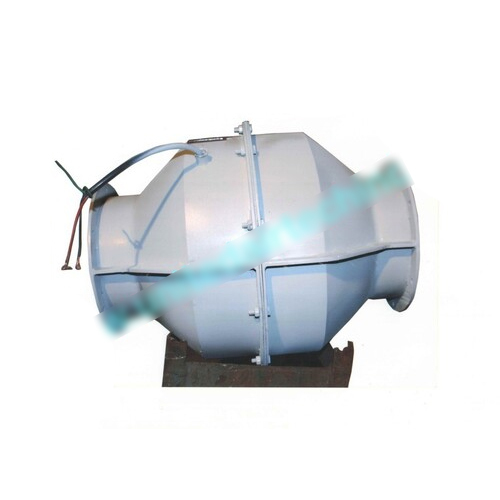

Price:
- 50
- 100
- 200
- 250
- 500
- 1000+

More Products in Inline Fan Category
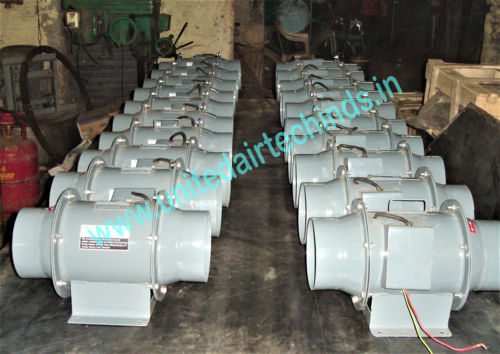
Inline Axial Fan
Price 20000 INR / Piece
Minimum Order Quantity : 1 Piece
Revolution : NA
Type of Fan : Inline Ducted
Usage : Industrial Ventilation & Exhaust Systems
Voltage : 230/380/415/440 Volt (v)
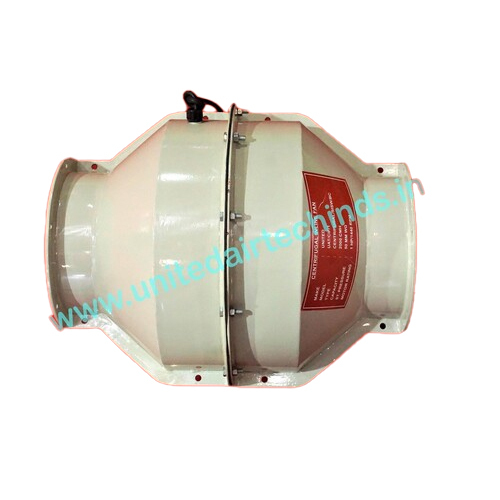
Inline Duct Fan
Price 20000 INR / Unit
Minimum Order Quantity : 1 Set
Revolution : NA
Type of Fan : Inline Ducted
Usage : Industrial Ventilation & Exhaust Systems
Voltage : 230/380/415/440 Volt (v)
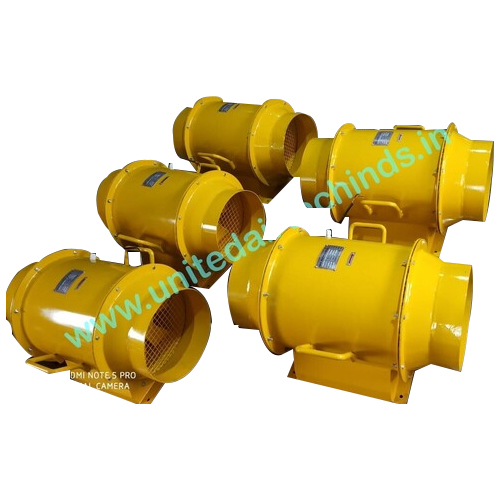
Metal Inline Fans
Price 18000 INR / Piece
Minimum Order Quantity : 2 Pieces
Revolution : NA
Type of Fan : Inline Ducted
Usage : Industrial Ventilation & Exhaust Systems
Voltage : 230/380/415/440 Volt (v)

GST : 27AACFU5752D1Z7

- F-79, Solaris-1, Saki Vihar Road, Powai, Andheri (E),Mumbai - 400072, Maharashtra, India
- Phone : 08045815716

- Mr Srinivas Salian (Managing Partner)
- Mobile :08045815716
- Send Inquiry
 Send Inquiry
 |
UNITED AIR TECH INDUSTRIES
All Rights Reserved.(Terms of Use) Developed and Managed by Infocom Network Private Limited. |
